Ten Years In, Traefik is Having Its Biggest Year Ever

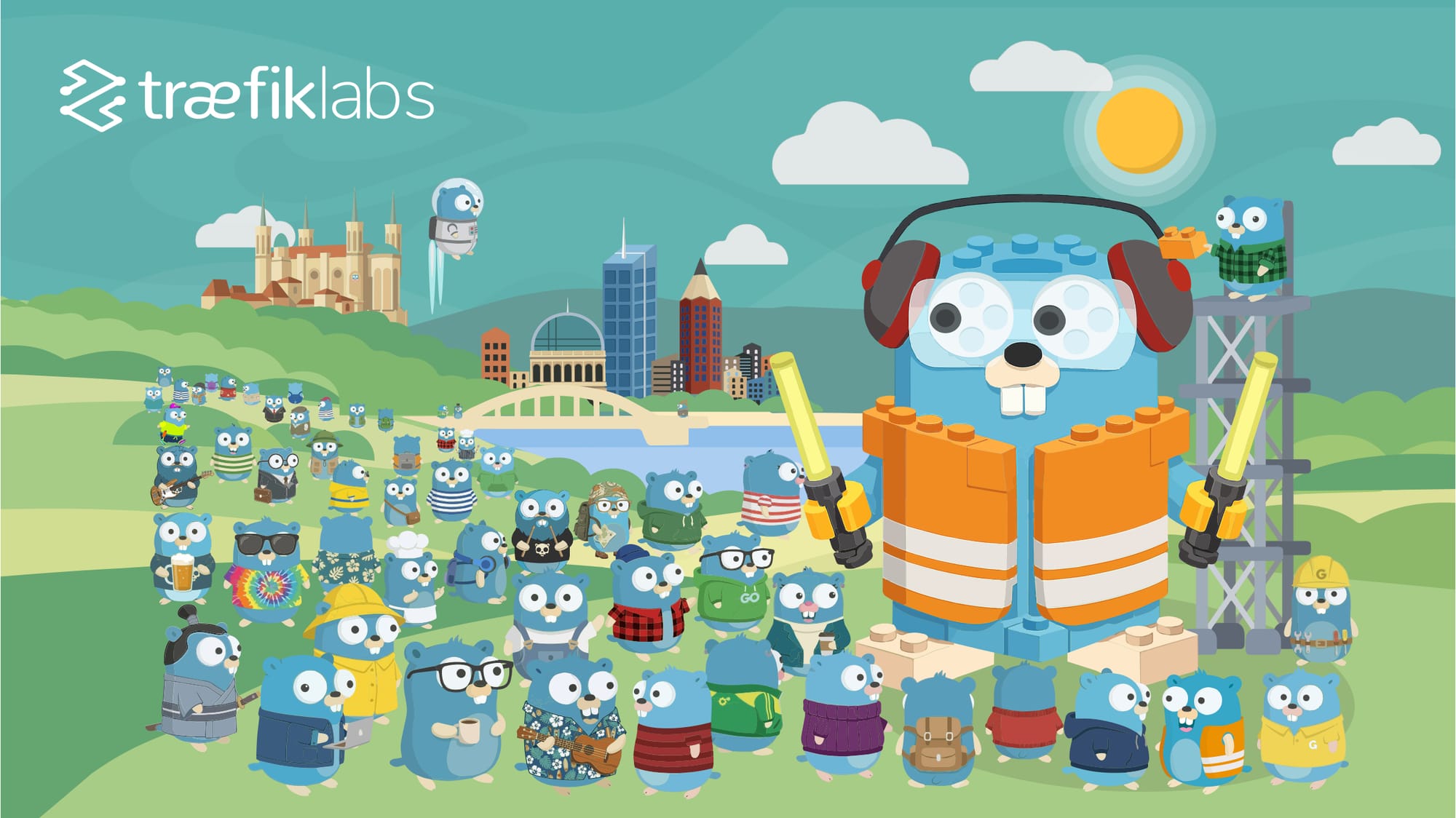
This week, Traefik crossed two milestones at once: 1,000 contributors on GitHub and 3.5 billion pulls of the official Docker image. And it happened as the project enters its second decade.
I would love to tell you this is a story about longevity. It isn't. 2026 is on pace to be the most active year in Traefik's history, with more pull requests merged than in any year before. Ten years in, the project is not aging gracefully. It is accelerating. And the reasons why say a lot about where cloud native infrastructure is heading.
From Cloud Native to Claude Native
I wrote Traefik's first lines of code in 2015, the year the cloud native movement got its name. Docker was two years old. Kubernetes had just hit 1.0. The CNCF was founded that summer. Everyone was suddenly running dozens of containers that appeared and disappeared in seconds, and the reverse proxies of the day, built for a world of static config files and graceful reloads, simply could not keep up.
Traefik was built on one idea: infrastructure should configure itself. Point Traefik at your orchestrator, and it discovers your services, builds its routing table, and updates it in real time as containers come and go. No templates, no config generation, no reload. In 2015 that was a radical idea. Today it is table stakes, and I am proud that Traefik helped make it so.
That first year, fourteen people committed code to the repository.
The graveyard of infrastructure software is full of projects that solved one era's problem perfectly and then stopped. What has kept Traefik alive is that the founding idea, dynamic, self-configuring traffic management, turned out to apply to every wave that followed.
When the industry consolidated on Kubernetes, Traefik became one of the most widely deployed ingress controllers in the world, and the platforms voted with their defaults. Rancher (SUSE) made Traefik the out-of-the-box ingress of K3s from the beginning, Nutanix standardized its Kubernetes Platform on it years ago, and Canonical MicroK8s now ships it as the default ingress controller on every cluster. The wave is still growing: RKE2 adopts Traefik as its default starting with v1.36 currently shipping, and since the retirement of Ingress NGINX, IBM Cloud, OVHcloud, TIBCO and others have each independently selected Traefik as their strategic ingress and Gateway API solution. When platform vendors who compete with each other all land on the same proxy, that is not a trend; it is a standard.
When organizations realized their ingress point was actually their API entry point, we built Traefik Hub: full API management on top of the proxy, with governance, versioning, access control, and a developer portal, running on the same runtime that already handled the traffic.
When LLMs reached production infrastructure, with their fragmented SDKs, scattered credentials, and zero observability, we applied the same playbook to AI traffic. The Traefik AI Gateway gives teams one secure, observable entry point to every model provider. And as agentic AI took off, we extended it with an MCP Gateway, bringing the same governance to the traffic between agents and tools.
Today, this converges into a single product vision: a unified gateway for VMs, containers, and AI. One runtime, one control plane, wherever your workloads live and whatever they talk to. And moving across that spectrum is seamless by design: start with open source Traefik Proxy, turn on Hub's API management, add the AI Gateway, and each step is a configuration change on the runtime you already operate, never a replatform. Your routing rules, middlewares, and operational knowledge carry over intact. Container router, Kubernetes ingress, API management, AI and MCP gateway: four eras, one architecture, one community.
3.5 Billion Pulls, in Perspective
Ten years of crossing eras compounds into a number: 3.5 billion pulls of the official Docker image. To put it in context, I went through the pull counts of Docker's official images, the curated library that includes the most foundational software in our industry. The handful of images that sit above Traefik are the bedrock of modern computing: operating system bases like Alpine and Ubuntu, language runtimes like Python and Node, and the major open source databases.
Traefik is one of the fifteen most downloaded official images on Docker Hub, standing shoulder to shoulder with the operating systems, languages, and databases the entire industry runs on.
Every one of those pulls is a decision to put Traefik on the path of production traffic. That is not a vanity metric. That is trust, compounded daily for ten years.
The Most Active Year in Traefik's History
Adoption tells you about a project's past. Development activity tells you about its future.
In 2025, the community merged nearly 500 pull requests. In the first six months of 2026 alone, it merged 470, a pace of roughly 940 for the year: almost double last year, and the highest sustained activity in the project's history.
A ten-year-old project setting all-time activity records is not normal. It is happening because of two deliberate bets.
The first bet: making the Ingress NGINX migration a non-event. When the Kubernetes SIG Network announced the retirement of Ingress NGINX, millions of clusters were suddenly on a countdown to running unmaintained software. Rather than telling users to rewrite everything, we built a native NGINX Ingress provider into Traefik: it reads existing Ingress resources and their nginx.ingress.kubernetes.io annotations directly, more than 80 of them, with no conversion and no YAML rewriting. That engineering effort, and the wave of adopters it brought, is one of the engines behind the record numbers above. New users file issues, contribute fixes, and push the project forward.
The second bet: going all-in on Gateway API. We didn't just implement the spec; we invested in shaping it, contributing to the specification work and its extension into AI and LLM routing. Gateway API is the future of Kubernetes networking, and Traefik is one of the few projects where you can run legacy Ingress, NGINX annotations, and Gateway API side by side, on the same instance, and migrate at your own pace. Being at the frontier of the spec means being where the ecosystem's energy is, and that energy shows up directly in our repository.
Activity follows relevance. The numbers are at an all-time high because, ten years in, Traefik is solving the two most pressing traffic problems in Kubernetes today.
1,000 Contributors, and Two New Maintainers
The milestone that means the most to me is not the pulls.
Fourteen people wrote code for Traefik in 2015. This month, the one thousandth contributor landed a change in traefik/traefik. Docker pulls measure adoption; contributors measure ownership. A thousand people own a piece of this project.
To every one of the 1,000, thank you. You built one of the most downloaded pieces of infrastructure software on the planet.
This week, I had the honor of welcoming two new maintainers: Kangmin Kim (@amazon7737), from Busan, South Korea, and Nándor Kollár (@nandorKollar), from Munich, Germany. Both earned it through high-quality contributions.
1,000 contributors, 3.5 billion pulls, and, a record nobody asked me to announce, our highest year ever for CVE reports. You do not get the first two without the third: security researchers only audit software the world actually runs. So, thank you Claude, I suppose. Jokes aside, vulnerabilities being found, and more importantly quickly patched, are the sign of a healthy project.
The Next Decade Starts Now
There has never been a better moment to jump in. The project is moving faster than at any point in its ten years, and the best time to join a community is when it is accelerating. We have already surpassed the 1,000 contributor mark since I began writing this blog post, so if you've ever thought about contributing to open source, contributor number 1,009 is a good first issue away.
Ten years ago, Traefik was a bet that infrastructure should configure itself. A thousand contributors and 3.5 billion pulls later, the bet keeps paying off, and the pace keeps rising.
I said this is not a story about longevity. It is a story about momentum. And the most active year in Traefik's history is the one happening right now.